
Below are some examples which provide an indication, but not an exhaustive list of how assertions can be tested at FAU and AA. Relevant tests – Vouching the cost of assets to purchase invoices and checking depreciation rates and calculations. This article will focus on assertions as identified by ISA 315 (Revised 2019) and also provides useful guidance to candidates on how to tackle questions dealing with these. Items in the balance sheet have been appropriately evaluated and allocated to reflect their actual economic value. David is comprehensively experienced in many facets of financial and legal research and publishing.

Occurrence and Rights and Obligations

For example, when auditing revenue, the existence assertion ensures that the reported sales transactions are genuine and supported by evidence, such as sales contracts, customer invoices, and shipping records. As with completeness, auditors use cut-off to determine transactions are recorded within the proper accounting period. Cut-off has special assertions in audit significance when reviewing payroll and inventory levels. The implicit or explicit claims by the management on the preparation and appropriateness of financial statements and disclosures are known as management assertions.
Revenue Reserves in Multi-Academy Trusts: Importance, Benefits, and Strategies for Financial Stability
Auditors may also directly contact the bank to request current bank balances. Accounting and Auditing for CPAs Understanding accounting and auditing is key to becoming an outstanding CPA. A significant risk is, by definition, a high inherent risk, never low or moderate. For example, the best course of action in this regard is to ensure that the company charges the amount for inventory as provided by the standard (IAS 2). As far as Rights and Obligations are concerned, this assertion is made by the management in order to validate that the entity has the right of ownership or the use of the given assets. It also needs to be ensured that the transactions actually pertain to the given entity, only.
- By signing and attesting to the authenticity of the statements, the preparer essentially puts their stamp of approval on the paperwork.
- If you believe the risk of material misstatement is reasonably possible for these areas, then the assertions are relevant.
- Inventory is another area that auditors may review to determine that inventory is properly valued and recorded using the appropriate valuation methods.
- Audit procedures for obtaining audit evidence are usually performed in the audit evidence gathering stage that may include both test of controls and substantive procedures.
- This assertion concerns the definition of “assets” in the contextual framework.
- Relevant tests – the test for transactions of checking purchase invoice postings to the appropriate accounts in the general ledger will be relevant again.
List of Audit Assertions Related to Classes of Transactions
- Financial accounting assertions are a part of auditing because there is no other way to hold the preparers of financial statements accountable.
- These tests provide concrete evidence to support the accuracy and completeness of financial data.
- In that case, it means they feel sure that all transactions have been recorded correctly and that there are no hidden liabilities or overstated assets.
- Completeness of information is vital to ensure that all disclosures that should have been included in the financial statements are present.
For cash, maybe you believe it could be stolen, so you are concerned about existence. Or Catch Up Bookkeeping with payables, you know the client has historically not recorded all invoices, so the recorded amount might not be complete. And the pension disclosure is possibly so complicated that you believe it may not be accurate.
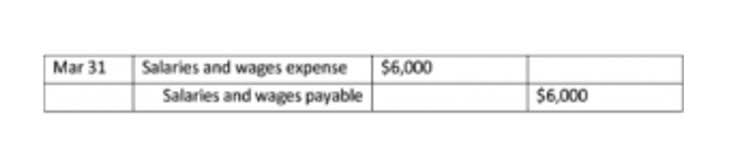
- There should be no unauthorized payroll expenses included in the wages and salaries.
- Applying these audit procedures and assertions lets the auditor say whether the inventory balance in financial statements is correct and reliable.
- For example, by employing techniques such as Benford’s Law, auditors can detect irregularities in numerical data that may suggest fraudulent activities.
- By doing so, auditors can prevent fictitious transactions from misleading stakeholders, preserving the integrity of the financial reports.
- Blockchain technology is another innovation that holds promise for the auditing profession.
- Companies might prematurely recognize revenue to meet targets or manipulate earnings.
Inherent Risk as the Driver
They will also not provide any structured approach for auditors to evaluate financial statements if they lack these assertions. Assertions apply to multiple parts of financial statements, covering assets, liabilities, revenue, expenses, etc. By testing these assertions, auditors gather audit evidence and assertions about the reliability of financial information.

This is due to it is impractical for auditors to examine all items in the client’s record. For example, the auditor may payroll perform an observation procedure by witnessing the counting of inventories by the client. This observation procedure is to test the existence of the client’s inventories counting procedures, not the accuracy of the client’s inventory.
- One of the primary assertions is existence, which verifies that assets, liabilities, and equity interests actually exist at a given date.
- The points made above regarding aggregation and disaggregation of transactions also apply to assets, liabilities and equity interests.
- The classification assertion relates to how a company or client classifies the information in its financial statements.
- Relevant test – reperformance of calculations on invoices, payroll, etc, and the review of control account reconciliations are designed to provide assurance about accuracy.
- In the same manner, the assertion about classification is about the transactions and events, and their proper classification into the relevant accounts.
- The completeness assertion in auditing tests that all transactions and activities that should be recorded are reflected in the financial statements.

For example, a long-standing auditing procedure to be used where practicable is the confirmation of receivables. The auditor should exercise due care to determine the legitimacy of the address of the person to whom receivable confirmation is being sent. In testing for existence, the auditor should seek evidence outside the books for that which has been recorded. The effort cannot stop with finding supporting debits and credits in a book of original entry.